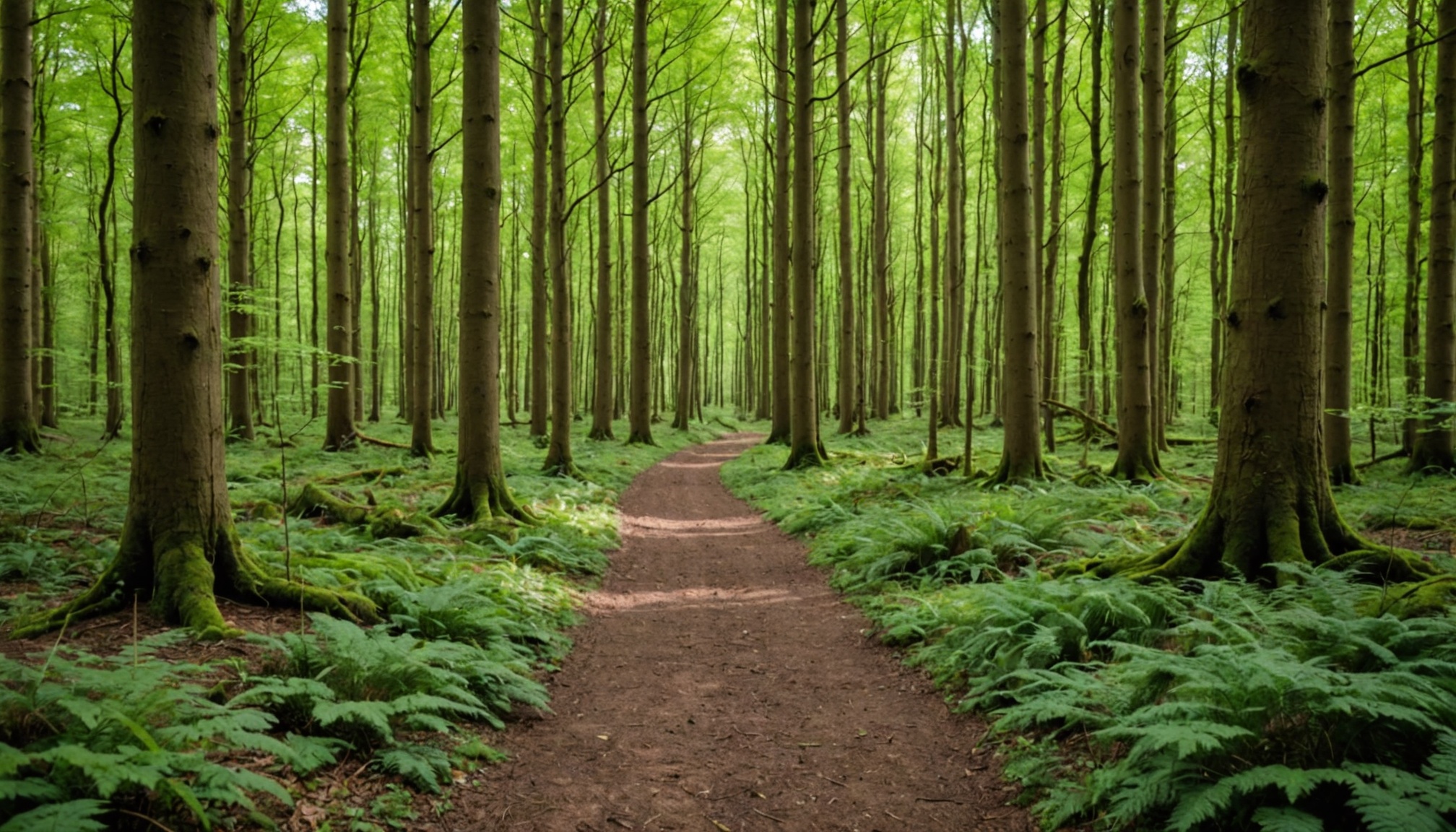
In 2001, Charlie Burrell and Isabella Tree made a decision that most British farmers would have found incomprehensible: they stopped farming their 3,500-acre estate in West Sussex and gave it to nature. Over the following two decades, Knepp Estate transformed from degraded arable farmland to a functioning wild ecosystem that now supports turtle doves, purple emperor butterflies, nightingales, peregrine falcons and all five species of British owl. The estate has become the most widely cited example of what rewilding can achieve in the British countryside — and a catalyst for a movement that has spread far beyond its Sussex origins.
Rewilding — allowing natural processes to restore ecosystems with minimal human management — represents a significant departure from the traditional model of British conservation, which has typically focused on maintaining specific species or habitats in precisely managed conditions. The rewilding argument is that managed conservation has failed to reverse the fundamental decline of British biodiversity, and that the solution requires giving nature more space and more freedom to develop on its own terms.
What Britain Has Lost
Britain is one of the most nature-depleted countries in the world. According to the 2019 State of Nature report, 56 per cent of British species have declined since 1970, and 15 per cent are at risk of extinction. The causes are well-documented: intensive agricultural practices, habitat loss and fragmentation, pesticide use, drainage of wetlands, and the management of upland areas primarily for grouse shooting. Britain has lost virtually all its original temperate rainforest, 97 per cent of wildflower meadows since the 1930s, and most of its original wetland area.
The baseline problem: One of the challenges in rewilding debates is what ecologists call "shifting baseline syndrome" — the tendency to use the nature of living memory as the reference point for what is "natural." British people who remember the countryside of the 1970s as natural are measuring against a baseline that was already profoundly depleted. The "natural" benchmark for British landscapes is not the postwar countryside but a Holocene ecosystem that included wolves, lynx, wild boar, beavers and extensive woodland cover.
Key Rewilding Projects in Britain
Beyond Knepp, a network of rewilding projects has developed across Britain at various scales:
- Carrifran Wildwood in the Scottish Borders has planted over 600,000 trees of native species across a previously bare valley, restoring ancient woodland and creating habitat for species that had been absent for centuries.
- Rewilding Britain, the advocacy and networking organisation, supports a growing network of projects and is pushing for 30 per cent of British land and sea to be in recovery by 2030.
- Beaver reintroductions in Scotland and England have demonstrated the ecosystem effects of keystone species return: beaver-modified waterways show improved water quality, reduced flooding and dramatically increased invertebrate and fish diversity.
- Lynx reintroduction remains one of the most contested proposals — with strong support from conservation scientists and significant resistance from farming communities in areas where the reintroduction would occur.
The Farming Community's Perspective
The rewilding debate is not simply between conservation enthusiasts and indifferent landowners. Many British farmers are deeply engaged with wildlife and landscape stewardship, and the relationship between farming and conservation is more complex than the rewilding narrative sometimes implies. The most successful rewilding projects have developed from collaboration between landowners, conservation organisations and local communities rather than from confrontation.
The restructuring of agricultural subsidies following the UK's departure from the EU — moving from area-based payments to "public money for public goods," which includes environmental outcomes — creates an economic context in which nature-positive land management is becoming more financially viable for farmers. This policy shift may prove to be as important as any individual rewilding project in determining what the British countryside looks like in 2050.