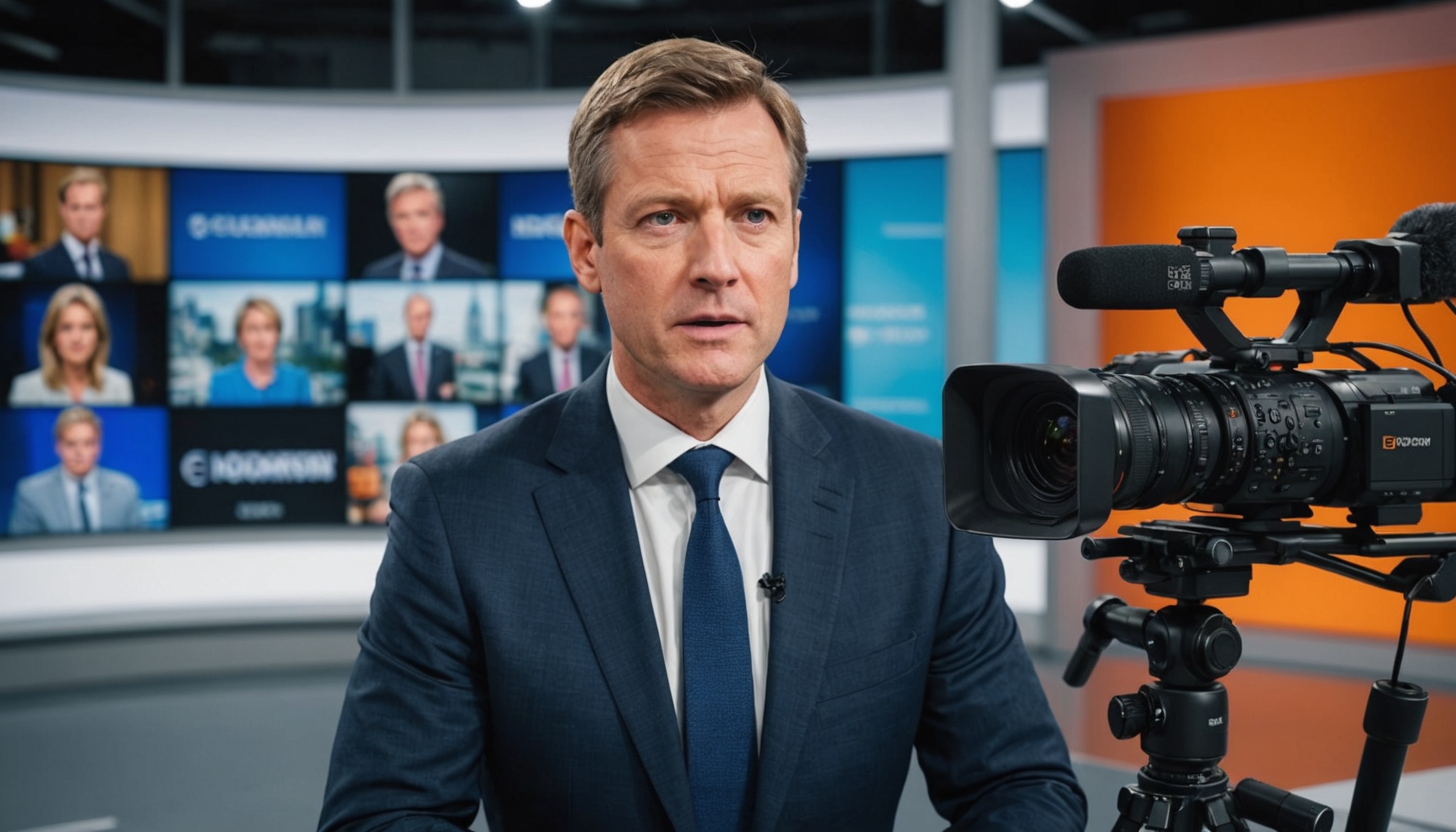
Britain has a more complicated relationship with the live broadcasting slip-up than any comparable media culture, and this complication is rooted in class. When a journalist or politician forgets they are on a live microphone, what is overheard — and how it is received — reflects a set of cultural assumptions about the appropriate register of public discourse, the gap between public and private speech, and the institutions that manage that boundary, which are distinctly British in character.
The BBC occupies a position in this story that has no direct equivalent in other countries. A public broadcaster funded by a universal licence fee, with a charter obligation to serve the full range of the British public, staffed by people who have historically been drawn from a relatively narrow educational and social background, producing content consumed by almost everyone — the BBC is both an intensely class-marked institution and one with a constitutional obligation to transcend class. This tension has produced, over ninety years of broadcasting history, some of the most culturally significant moments of unguarded speech in British public life.
The Weight of the BBC Microphone
The particular weight of a BBC gaffe derives from the institution's position. When a BBC presenter or correspondent is overheard making an unguarded comment, the offence — if there is one — is not merely personal but institutional. The BBC's reputation for impartiality, authority and above-the-fray professional conduct is the explicit backdrop against which any departure from that standard is measured. This raises the stakes considerably above equivalent incidents on commercial channels, where the house style is more relaxed and the institutional expectations less demanding.
Political correspondents and studio anchors at the BBC operate under a degree of public scrutiny that their commercial counterparts do not fully share. When a diplomatic incident has been narrowly averted, or a piece of analysis emerges in studio conversation that reflects the journalist's private view rather than their broadcast persona, the clip travels fast and the debate about what it reveals is more charged than it would be elsewhere.
Politicians and the Open Microphone
Some of the most politically significant live broadcasting incidents in Britain have involved politicians rather than journalists. The tradition of political leaders being caught in unguarded moments by broadcasting equipment is as old as broadcasting itself, but the modern era of ambient recording and instant social media distribution has made this category of incident both more frequent and more consequential.
The Gordon Brown incident: The most discussed political hot mic moment in recent British history occurred in 2010, when Gordon Brown, in conversation with an aide in a car following an interview, described a member of the public he had just spoken to as a "bigoted woman." The comment, overheard by the Sky News broadcast microphone he was still wearing, became a significant event in that year's general election campaign. The incident was discussed not only as a political gaffe but as a window into the disconnection between politicians' public and private registers.
This incident became a landmark in the genre because it illustrated so precisely what the hot mic captures: not necessarily the worst of a person, but the gap between the performance of public engagement and the more candid assessment that follows it. The public register of political speech — carefully managed, inclusive, non-judgemental — met the private register, and the juxtaposition was uncomfortable enough to enter the public record.
Radio: Where Britain's Broadcasting Voice Found Itself
British radio — and particularly BBC Radio 4, with its distinctive commitment to intelligent conversation and its remarkably loyal and articulate audience — has generated its own tradition of memorable unguarded moments. Radio presenters often work with less visual distance between themselves and their microphones than television presenters, and the conventions of radio conversation are somewhat less formal, creating conditions where candid remarks can surface more easily.
The Today programme, which has occupied an extraordinary place in British public life for six decades, has been the site of some of the most significant exchanges in British broadcasting — both planned and unplanned. Its tradition of adversarial political interviewing means that the line between the formal interview and the off-the-record remark is sometimes crossed in real time, with consequences that can extend well beyond the programme itself.
Class, Accent and the Unguarded Moment
Britain's relationship with accent and class means that what people say when they forget the microphone is live is sometimes less significant than how they say it. A shift in register — the south-east England accent that emerges when a presenter whose broadcast voice is more carefully modulated drops their guard — can itself become a comment on the constructed nature of broadcast performance. The British relationship with voice, class and self-presentation is complex enough that even vocal relaxation carries social information.
This dimension is absent from equivalent incidents in broadcasting cultures without Britain's particular class linguistics. The Australian or American broadcaster who relaxes their on-air persona doesn't necessarily reveal anything about their social origins. The British equivalent may say more than they intended about a set of social negotiations that are never quite finished.
The Social Media Era and Live Broadcasting
The social media era has transformed the hot mic incident in British broadcasting as elsewhere. A comment overheard during a BBC broadcast can now reach an audience vastly larger than the original programme's viewership within hours, and the debate generated online is often more extensive and more charged than the original incident would have justified. This amplification has made broadcasters and politicians more cautious about unguarded speech in broadcasting environments — not always with positive effects on the authenticity of public discourse.
There is a genuine loss when public figures feel so surveilled that the spontaneous comment, the rueful aside, the candid moment is systematically eliminated from public broadcasting. The moments when the polished performance gives way to something more human are not merely entertaining — they are windows into the reality behind the presentation. British public life, which has always had a tendency towards the managed and the carefully controlled, may need these moments more than it acknowledges.