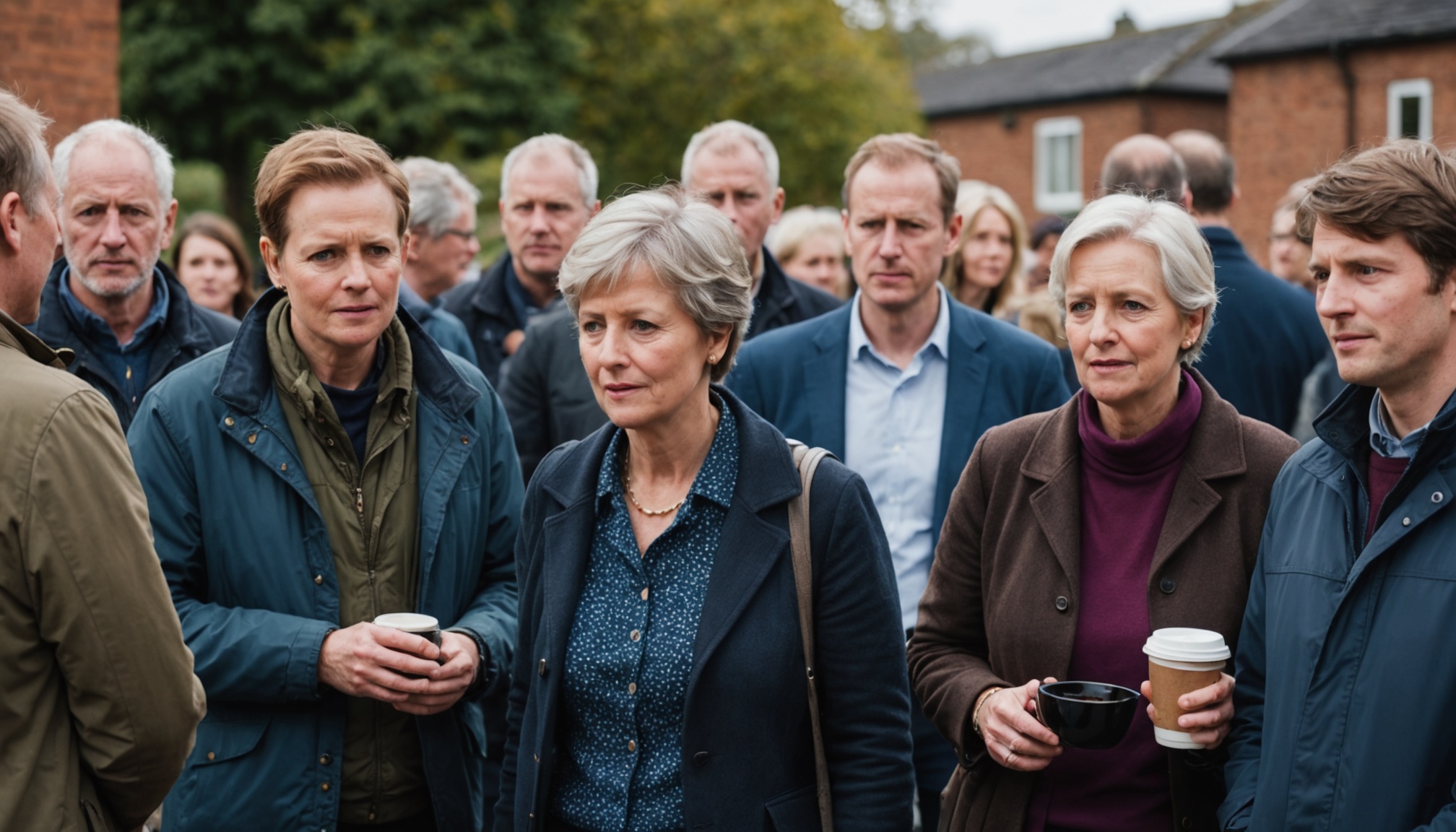
The British community has always been a complicated concept. This is partly a matter of scale — a country of 67 million people spread across four nations, hundreds of distinct regional identities and a vast range of class, ethnic and cultural traditions does not produce a single model of community life. It is partly a matter of history — British social institutions, from the established church to the trade unions to the village cricket club, carry histories that shape who feels included in them and who doesn't. And it is partly a matter of the same structural pressures that affect community life across the developed world: urbanisation, digital connectivity, mobility, the decline of traditional institutions and the rise of new forms of association.
The sociological picture of British community life is not straightforwardly one of decline, though there are important dimensions of weakening social fabric. It is a picture of change: some traditional forms of community are genuinely losing their place, while new forms — community gardening, running clubs, mutual aid networks, online communities built around shared interests — are growing. The question of what makes these different forms of connection valuable — and what enables them — is worth asking seriously.
The British Voluntary Sector
The UK has one of the largest voluntary sectors in the world relative to population. Millions of people volunteer in formal and informal capacities — coaching youth sports, staffing food banks, running community choirs, coordinating neighbourhood watch schemes, serving on parish councils. This voluntary infrastructure is the connective tissue of British community life, and it is under stress from both the ageing of volunteer cohorts and the time pressures on working-age people.
Class and Community in Modern Britain
Class shapes community life in Britain in ways that are both obvious and easy to understate. Affluent neighbourhoods have better maintained physical infrastructure for community activities — green spaces, community halls, sports facilities. They also have lower turnover, more social capital and more resources for voluntary sector activity. Deprived areas are often described in the language of community deficit — but research on these areas frequently finds dense informal networks of mutual support and community solidarity that are structurally invisible.
The mutual aid finding: Studies of the mutual aid networks that emerged in the UK during the 2020 pandemic found that they were significantly stronger in areas where formal community institutions were weakest. The informal capacity for solidarity doesn't disappear when institutions fail — it often becomes more visible.
Digital Community and Its Limits
Online communities — WhatsApp groups, local Facebook pages, Nextdoor and interest-based forums — have become an important part of how many British people maintain social connection. They are particularly significant for people with limited physical mobility, for parents with young children, and for people in areas with limited local social infrastructure. But they sit uneasily in the sociology of community: they provide connection without propinquity, relationship without shared physical space, which changes what the connection can actually do.
The Future of British Community
The most resilient British communities are not necessarily the ones with the longest traditions — they are the ones that have adapted to changing demographics, updated their activities and leadership structures, and made genuine efforts to be relevant and welcoming to the full range of people who live around them. Community doesn't require a particular form of association; it requires the consistent voluntary investment of people who choose to show up for each other.